Why Our Parents Aren’t “Hoarding” – They’re Holding On: Helping GenX Understand the Meaning Behind Clutter
About the Author: Lori Halbach, a Certified Senior Move Manager® based in Boulder and Denver Colorado, brings years of trusted experience helping families through downsizing, decluttering, and home transitions.
If you’re a GenXer like me, you are likely contemplating gently nudging your parent(s) to declutter. You’ve probably felt the tension between wanting to help and wanting to honor their choices. What we see as clutter might feel to them like comfort, security, or a lifetime of stories—items that have great value.
My experience working with families in transition has taught me that walking our parents through the process of decluttering and downsizing isn’t about pushing for less. It’s about respecting the individual human who owns each item and understanding the meaning and memory each possession represents.
Clutter or Personal Preference? Understanding the Difference
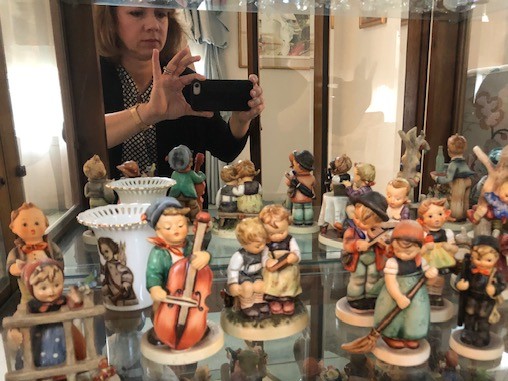
Before labeling anything “clutter,” it helps to explore what it really means. Clutter is anything in a space that no longer serves the owner in a meaningful way. It’s the pile that makes you take a deep breath when you see it. It can be an obstacle that’s difficult to navigate, or it might sit in a curio cabinet as a collection that no longer holds significance but still lingers.
Personal preference, on the other hand, is a curated environment that reflects who we are. It may not look minimal or trendy. It may not be what others consider orderly or would choose for themselves. But it’s theirs—shaped by decades of living, loving, grieving, celebrating, and surviving.
For many older adults, belongings aren’t just things—they are anchors. They represent:
- Hard-earned stability after years of financial uncertainty
- Items intentionally kept because money was tight in earlier decades
- Gifts that make them feel remembered
- Bedrooms and cupboards that hold echoes of children, guests, and milestones
To call these items clutter without understanding their meaning can feel dismissive, even when our intentions are good.
Why the Generational Divide Exists
- GenXers were raised on mobility.
Our generation grew up adapting to rapidly evolving technology, changing jobs, and moving trends. We learned to streamline, optimize, and update. - Our parents were raised on resourcefulness, scarcity, and preservation.
Many parents of GenXers lived through recessions, wars, rationing, or simply a time when things were made to last. They are the children of parents who raised families through the Great Depression or WWII, when the nation buckled down for a common cause. Throwing away something that “still works” goes against a deeply rooted value system. - Minimalism is modern; saving was survival.
Today’s culture celebrates decluttering and simplicity. Our parents celebrated holding onto useful items to repair, prepare, and avoid going without. When GenXers see clutter, we often feel a responsibility to simplify. When our parents see possessions, they see resourcefulness—the blood, sweat, and tears that purchased that item—anchors of past memories.
Both perspectives are valid—they’re just shaped by different eras.
How to Bridge the Gap with Compassion
- Start with curiosity, not criticism.
Ask, “Would you tell me about this piece? Why is it significant to you?” Meaning opens the door to understanding. - Identify true safety concerns.
Sometimes clutter can be dangerous, especially for aging adults. Focus on safety, mobility, and comfort rather than aesthetics. - Make decisions together.
Be a guide but give your parent(s) autonomy. Empowering aging adults to lead the process preserves dignity. - Redefine “letting go.”
Letting go doesn’t mean forgetting—it means honoring memories in a way that supports current needs. - Bring in a neutral, compassionate guide to preserve relationships.
Sometimes families need a third party to navigate emotional terrain. That’s where Senior Move Managers® like Square One Move Organizers can help.
The Heart of the Matter
Clutter isn’t always about chaos, neglect, or messiness. It’s about meaning. It’s about the years our parents lived before we were born, the sacrifices they made, the treasures they kept, and the items that represent their identity and precious memories.
GenXers thrive on clarity and efficiency. Our parents thrive on familiarity and continuity. When both generations understand this, conversations become gentler, safer, and more productive. It’s not really about clearing rooms—it’s about preserving dignity, strengthening connection, and helping loved ones move forward together, one compassionate step at a time.